
I. Introduction
The Kansas Communist Party has recently been forced in to the limelight by (of all things) a post made on our official Facebook page outlining our objection to a proposed 1% local sales tax increase. This increase is being pushed by a group of Wichita capitalists united in a group called “Wichita Forward”.
Sales taxes have been constantly demonstrated as putting a disproportionate burden on the working class. Coupled with the property tax reduction included in the proposal, it would mean that the local working class would be again footing the bill for the services mostly utilized by the wealthy, such as the local arts venues, police protection, and society itself.
This group made a since retracted commercial[1] holding us, a small organization with no political power and a few dozen followers on Social Media[2] (at the time) as the primary opposition to their proposal (to which we are, as mentioned, opposed). They enraged people across the entire political spectrum who are against the sales increase by painting them as “Communists”, even if they themselves so often level that accusation on others[3] (strangely enough, it doesn’t seem as if there is any word on the position of the local Democrats, which received large donations from many of the taxes backers).
II. The Parties
A. Wichita Forward
The main backers of the scheme, Wichita Forward[4], is a coalition of the types of big wigs one can always expect to form such groups. It’s made up of bankers, developers, business owners, landlords, and real estate investors that form the who’s who of local capitalist exploitation (the three most significant members, discussed in detail later, are Ben Hutton, Jon Rolph, and Aaron Bastian). The organization has millions in reserve to spend on this campaign, even paying a local political consultant Ben Davis[5], putting together commercials like the one above, and sending mailers to Wichita residents imploring them to vote “yes” on this campaign (potentially in violation of election law[6]).
B. The City Council
It should be noted that the members of Wichita Forward come from both sides of the aisle[7], but have found common cause in their wealth and their interests in maintaining that wealth. Both Democrats City Council members Joseph Shepard[8] and Maggie Ballard[9] received money from the pro-tax crowd, as well as the LLC’s and large businesses they control, and both have spoken in support of the measure[10] (although Shepard refused to vote on the issue himself, and has made statements both in support and against it). It comes as no surprise that Shepard, a particularly vacuous politician, would support the measure, given his history in useless resume filler non-profits, including work for a group that was run by one of the projects lesser known (but still well connected) board members[11]. In fact it seems that the Dems are the ones leading the effort to implement the tax, as the outgoing leader whom Shepard replaced was one of its most ardent supporters (Brandon Johnson), and happens to be a darling of the local liberals[12]. Mike Hoheisel, the Democrat council member representing District 3, has stated his support is based on there being “something in it for everyone.”[13] All this goes to further demonstrate the artificiality of the “left vs right” divide when it concerns the political parties. They both serve capitalism.
C. Opposition
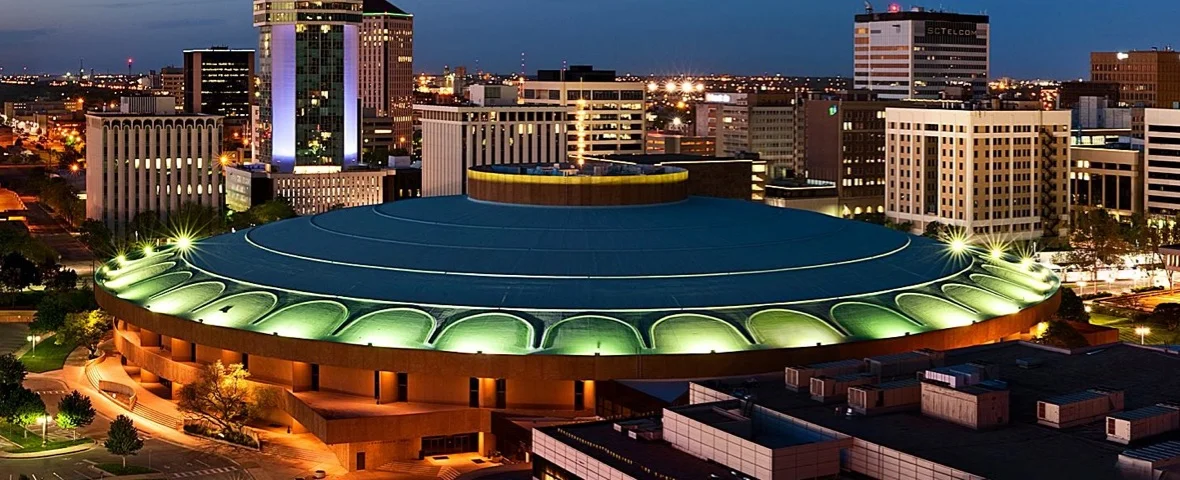
In a rare show of unity, the voters themselves are roundly against the proposal. Conservatives such as John Whitmer, the chair of the Sedgwick County Republican Party[14] and radio host[15] has come out strongly against the plan based on his “No New Taxes” political stance (although when a member of the Kansas Legislature he was willing to pass a large sales tax increase to save a tax break for the wealthy, even if he did so with literal tears in his eyes[16]). Wichita Libertarians, of which Mayor Lily Wu[17] is a member, have also come out against the tax hike for the predictable reason of being against all taxes in general. Another group firmly opposed to the tax is “Save Century II”[18], a group founded to support the renovation of Wichita’s downtown performing arts and convention center (despite the fact that the sales tax promises to fund such renovation [see below]). This group contains both conservatives such as Karl Peterjohn and liberal democrats such as Celeste Racette. Together, they have put together another group specifically founded to fight the sales tax called “The Better Government Institute”[19] (which there is little information on).
III. The Issues
A. The Proposal
The proposed bill outlined on their own website[20] only highlights the ways they think the money should be spent, and while they have cited a few questionable studies to make up the amount of money it will raise, it fundamentally remains the guesswork and outright fabrications that make up most neoliberal economic plans. According to Wichita Forward, the one-cent sales tax alleges to raise roughly $850 million over seven years and would be allocated to four major areas, each dedicated to specific priorities:
1. “Building a Safe and Resilient Community” — $375 million
- Public Safety — $225 million: Investments in police and fire facilities, technology, training and equipment to address rising service demands and safety concerns.
- Homelessness and Housing — $150 million: Funds capital improvements and “permanent support” for a multi-agency homelessness center, including investments in affordable housing and prevention programs.
2. Revitalization of Century II and Convention Space — $250 million
- Century II Renovation — $25 million: Dedicated to “revitalizing” the aging Civic Center.
- Convention Space Improvements — $225 million: Renovations and additions to Wichita’s convention facilities to attract events and visitors.
3. Property-Tax Relief — $150 million
- Allocated to reduce property taxes, with an expected annual relief equivalent to about 12% through 2033.
4. Performing Arts and Culture — $75 million
- To help build a new downtown performing arts facility through a public/private partnership — paired with an additional $75–$100 million in private philanthropic support.
5. To ensure transparency, the proposal calls for an “independent citizen oversight committee” to monitor spending and verify that funds are used only as authorized by voters (read: Wichita Forward).
B. How the Rich Will Save Money
“The Rich aren’t like us, they pay less taxes”
– Peter De Vries
We can look at a few simple examples of why the big backers of Wichita Forward have invested so much money in to this campaign, as three of Wichita’s largest business owners are on their board. All live in million dollar homes outside or at the edge of town, and away from the issues they claim to wish to solve.
According to publically available records, Ben Hutton, the 45 year old CEO of Hutton Builds[21] lives in a home worth approximately $2,454,000. In 2024 he paid around $35,000 in property taxes on that home. According to Wichita Forward, if he is successful in pushing through this tax, he could save as much as $5,000 per year on that cost. It is worth noting that having spoken to a few folks that knew Mr. Hutton personally since childhood, his claims of working construction “since he could pick up a hammer” are a complete fabrication. He was apparently your average spoiled rich kid.
Jon Rolph, another wealthy Wichita Forward backer and owner of Thrive Restaurant Group[22] has listed as his official address a house worth $1,736,200, for which he paid $24,000 in taxes in 2024. He could save $2,500 on his property taxes. Of note is this just looks at Mr. Rolph’s home. It one doesn’t consider any of the 172 commercial restaurant properties that he owns, around 150 of which are located in Wichita (funnily enough, he still calls himself a “small business owner” on his website[23]). All told, he would save substantially on his property taxes.
The third large supporter of the measure is a 43 year old man named Aaron Bastian, president and CEO of Fidelity Bank[24] (a position running a $1.9 billion bank passed to him from his father and grandfather before that). He lives in a new 2022 home worth $1,340,000 in one of the more secluded parts of town. He pays around $18,000 per year on his property, so he would be set to save an amount similar to those previously mentioned. Bastian serves on a number of boards, including the Rotary Club[25], the Greater Wichita Partnership[26], Leadership Wichita[27] and Visit Wichita[28]. All of these groups share the purpose of fulfilling the fantasy that all the local rich seem to have of making Wichita into some sort of tourist destination, despite the great number of much better options available nearby like Kansas City and Oklahoma City.
When it comes to the things the proposed sales tax would affect like groceries and consumer goods, each one of these people do not spend much more than your average person. They shop at much the same stores as you or I, and have similar caloric needs. Looking through my own bank records, in the month of January 2026 we have spent around $800 total on groceries for my Girlfriend and I, and our admittedly large number of pets. Divided by two that makes it around $400 per person, per month. If we implemented the 1% tax being proposed by these folks, everyone like me would spend an extra $40 on groceries alone. That may not seem like much, but remember that is only for groceries, and most people also buy other things, and when those things are thrown in to the equation, that number jumps up quite a bit (especially since everything we buy would be taxed more, except our real estate).
Of note is that one analysis from an opposition group has indicated that non-grocery items would be taxed at 13.3%[29].
C. How Sales Taxes Harm the Working Class
“Sales taxes have been constantly demonstrated as harming the working class.”
– Kansas Communist Party
My Girlfriend and I are fortunate in that we are not paying rent like 32% of Wichita residents[30]. The house we live in, which my Girlfriend owns the mortgage to, has a yearly tax bill of around $1,700 for a home worth about $150,000 located in a more, shall we say “exciting” part of town (she bought it for less than half of that in the 2000’s). This bill would therefore save us $200 each year, while costing us hundreds more in sales tax. The 32% (or more) of people that rent in Wichita will not see a decrease in their rental fees, but it will allow more of the money they spend on rent to be kept by the local landlord class. Meanwhile, everyone will be spending more on the other things we need to survive.
This is a just one personal example outlining what history has already empirically demonstrated (and over which much ink has been used[31]). Sales taxes harm the working class precisely because rich and poor alike have the name basic needs, and sales taxes are a tax on most of those needs. According to the Tax Policy Institute, “the tax burden as a share of income is highest for low-income households and falls sharply as household income rises”[32] and places more strain on lower income households[33]. More amazing is that Kansas has already had this discussion at the state level, with the legislature passing a law that removed sales taxes on groceries at the beginning of this year, and reducing them as a whole over time[34] (fully effective this January of 2026).
IV. Conclusion
“Taxes are the price we pay for a civilized society.”
– Oliver Wendall Holmes Jr.
While this all involves a hot topic in a mid-sized Midwestern city, such controversies occur in all communities around the U.S. as the rich try to further place the burdens societal support on the backs of the working class. Here, as elsewhere, they create well-funded and polished campaigns to push the people to support the proposals put forward by their puppet politicians.
They use language meant to trick a broad swath of the community by advertising such measures as good for both law enforcement with “Public Safety” budget increases (in the case of the conservatives) and social programs (“Homelessness and Housing” to appeal to the liberals). But often, as here, they include provisions that put the rich in more control of the community. Here, the part of the proposal that creates an “independent citizen oversight committee” to determine where the money raised in spent. Like many cities under capitalism, the local rich often have a greater say in who exactly sits on those committees, especially as the folks at Wichita Forward have demonstrated enough political capital from their financial backing of specific politicians to have the city spend over $200,000 for a special election to put the issue before voters. It does not stretch reason to surmise that they could also flex those same muscles to put themselves or their friends on such a review board.
The main purpose of the plan is their number 4. Getting $150 million in property tax relief sounds great to a group of people that make the bulk of those payments for their mansions, businesses, and rental properties, even if they have tried to spin it to appeal to regular homeowners like the elderly they know mostly show up for irregular elections such as this. More insidious is the realization that point number 3 is a giveaway to them as well. Developers and construction company owners would make huge profits from the city contracts related to further developing downtown Wichita, and developers and construction company owners make up a large section of the Wichita Forward backers (such as Hutton, who owns one of the largest). Homeless shelters and community services, in a capitalist system, would also mean more money in to the non-profits they typically create and control as tax breaks and slush funds. Many of those in Wichita Forward in fact sit on the boards of the local non-profits. They have proposed yet another system which turns working class money in to Champaign and hors d’oeuvres for the rich.
One of the arguments the supporters use is the claim that much of the tax will be spent by outside tourists visiting the city for it’s events and improved offerings. Anyone who has lived in Wichita, however, would understand how ridiculous this claim is. We have a nice enough city, but there is little to offer tourists here, even if that got around the fact that the tax will still mostly affect the working class. The claim that these tourists will account for the $200 million in funding that they continue to cite (without any support), is an amount they fantasize about taking from people coming here because they have to.
Hilariously, the statements of Wichita Forward blaming our organization for the opposition have done us a great service of in bringing public attention to our existence, which is something we have been fighting for, but a brighter point in all of this seems to be that the general public is catching on to this capital control, and it has put the line between the working class and the bourgeoisie into starker relief, if at a local level. As stated previously, folks from across the political spectrum have raised loud objections to the plan in a show of political unity that I’ve never personally experienced. We see the political lines fall away to the simple fact that it is, and has always been, a fight between the have and have-nots. It may be that most will not see that, and remain offended that they somehow have the same core beliefs as a bunch of Communists. However, there will be a few that are now inspired to consider the world around them in more detail, and that small few are an important victory.
[1] See: Wichita Forward removes controversial sales tax ad. Accessed 2026.
[2] Website: Kansas Communist Party | Wichita KS. Accessed 2026.
[3] Dion Lefler. KS conservatives don’t like being called ‘communists’ either | Wichita Eagle. January 27, 2026.
[4] Website. Wichita Forward. Accessed 2026.
[5] See: Ben Davis. Cato Consulting Group | Political Strategy. Website. Accessed 2026.
[6] Meg Britton-Mehlisch. Sedgwick County DA to review Wichita Forward mailers with incorrect information. February 2, 2026.
[7] Jon Rolph was appointed to the Kansas Board of Regents by Democrat Governor Laura Kelly. See: Tim Carpenter. Vice chair of Kansas Board of Regents to resign post with two years left on term. June 10, 2025.
[8] Website: Joseph Shepard for Wichita | Join the Movement. Accessed 2026.
[9] Ryan Newton. Maggie Ballard – Wichita City Council Dist. 6 candidate. October 15, 2025.
[10] Id.
[11] See: Home Page | Kansas Leadership Center. See also: Damon Young — Lead Wichita | Equipping, Inspiring, and Growing Leaders. Accessed 2026.
[12] Bonita Gooch. As Brandon Johnson Exits Council, His Imprint on District 1 Is Clear – The Community Voice. December 25, 2025.
[13] Bonita Gooch. Proposed Wichita Sales Tax Sparks Debate Over Fairness and Community Input – The Community Voice. December 11, 2025.
[14] Website. SCRP Leadership Team — Sedgwick County Republican Party. Accessed 2026.
[15] See: John Whitmer Show | iHeart. Accessed 2026.
[16] Opinion. Kansans will bear the brunt of tax increases backed by Gov. Sam Brownback and GOP legislators | Kansas City Star. June 12, 2015.
[17] See: Lily Wu – Wikipedia. Accessed 2026. See also: Eric Boehm. Is Wichita Mayor-Elect Lily Wu a Libertarian?. November 10, 2023.
[18] Website: Century II Supporters | Wichita, KS – Save Century II. Accesses 2026.
[19] See: Kylie Cameron. Wichita group emerges to oppose one-cent sales tax proposal | Wichita Eagle. December 30, 2025.
[20] Website. Ballot Language. Accessed 2026.
[21] Website. Meet The Hutton Team. Leaders, Designers, Builders and Architects. Accessed 2026.
[22] Website. Thrive Restaurant Group. Accessed 2026.
[23] Id.
[24] Website. Aaron Bastian, President and CEO | Fidelity Bank. Accessed 2026.
[25] Website. Home – Rotary Club of Wichita. Accessed 2026.
[26] Website: Greater Wichita Partnership. Accessed 2026.
[27] Website: Leadership Wichita | Wichita Regional Chamber of Commerce. Accessed 2026
[28] Website: Wichita Top Attractions | Best Places to Visit in Kansas. Accessed 2026.
[29] Thomas Lynch and KWCH Staff. Coalition opposing proposed 1% sales tax in Wichita makes case against initiative. January 15, 2026.
[30] According to 2023 H.U.D. date. See: Comprehensive Housing Market Analysis for Wichita, Kansas. Accessed 2026.
[31] Tanvi Misra. How Local Sales Taxes Target the Poor and Widen the Income Gap – Bloomberg. January 20, 2015.
[32] Website. Who bears the burden of a national retail sales tax? | Tax Policy Center. Accessed 2026.
[33] Analysis. Sales Taxes and Their Impact on Low-Income Households – RP World. January 18, 2024.
[34] Government Website. Kansas Department of Revenue – Pub. KS-1223 Food Sales Tax Rate Reduction. Accessed 2026.
Leave a Reply